
Cycle Islington member Christian Wolmar wrote an article for …….The Telegraph, on 17 January stating that we need a shift away from thinking that cars are the only way to get around. (We couldn’t agree more !) Have a read:
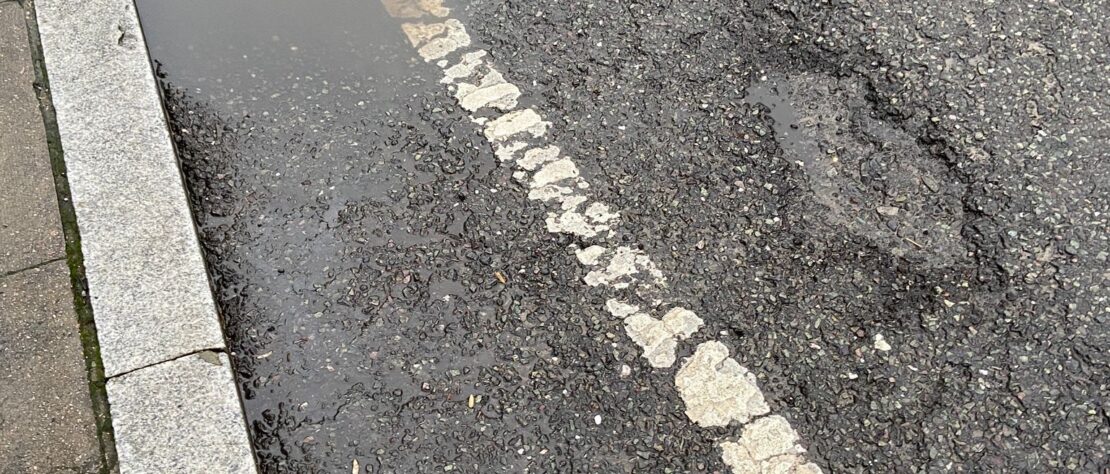
Hurrah, finally it has been said: Britain’s “obsession” with potholes could be making our roads worse. The logic from the RAC is that the focus on endless repairs could be diverting resources from preventative maintenance. Too right. But I would go much further. The best way to avoid potholes is stop stop using your car. Or, at least, use it less. The benefits are enormous.
You don’t have to be a muesli eating Islingtonian like me to recognise that cars have been a mixed blessing with the obvious advantages being matched by clear downsides, ranging from pollution and accidents to congestion and the ugliness of road-dominated environments. Not to mention pavement parking and road rage.
People who drive everywhere are less healthy than those who use public transport or simply walk. It is not the existence of cars that is the problem, but our obsession with them which in turn leads to our overdependence on them. Fear not, no one is suggesting a ban on motor vehicles but we need a shift away from thinking that jumping in the car is the only way to get around.
A stunning series of pictures in a recent book, Architecture for Cars by Christopher Beanland, illustrates how in the post-war period, the built environment started to be designed around the needs of four wheeled objects rather than two legged humans. At the height of this car-obsessed era, Drummonds Bank in Trafalgar Square had a drive in portal, obviating the need for people to get out of their cars to do their business.
Towns were planned around the idea of making access easier for cars and those without them inevitably lost out. Just look at the dark subways below major roads, or the huge pedestrian bridges that straddle them. They are the only way the carless can get to the other side of the multi-lane barriers that sprang up everywhere in towns and cities from the 1950s onwards.
In the sixties, there were plans to rip down city centres to allow ever easier access to motor cars, to the detriment of the city environment. There are some examples of what this would have meant in practice. My favourite is the derelict Charles Church in Plymouth, which is now imprisoned in the middle of a roundabout, making it inaccessible to anyone without the courage to run across a couple of lanes of fast traffic. The church was abandoned after being burned out by German incendiary bombs in the war. Had it not been, local Christians might now be having to engage in a weekly dance with death to make it across the road. Now it stands as a roofless testament to our obsession with the car. What a way to treat what should be a sacred building.
Many other towns did suffer the indignity of having town centres and period housing torn down to make way for ever wider streets. And then the madness stopped. Or at least was reigned in. That change of heart is best illustrated in London, where a series of ringways was planned to be built in the 1970s. Most of these roads would have been built on stilts. The Westway from Paddington to Shepherds Bush is of the few sections of the project that was actually built.
The list of London districts through which these roads would have passed reads like a catalogue of des res Victorian parts of the capital: Primrose Hill, Kentish Town, Holland Park, Peckham, Clapham, and so on. Fortunately, this insane project – initially blessed with cross party support despite the fact it would have involved the demolition of 40,000 houses – was stopped in the face of widespread public opposition. Urban motorways then became unfashionable, with Glasgow being the last city to have built one. Predictably, the M74 was not fully opened until 2011.
Nevertheless, the battle between cars and people still raged. Every attempt to instil some control over the hegemony of the car, ranging from traffic wardens and bus lanes to the congestion charge and reduction of car parking spaces met with fierce resistance. Yet who would want to bring back traffic to Leicester or Trafalgar squares, or give the civil servants back the parking they enjoyed in Horse Guards Parade and Somerset House? And surely Soho would benefit from a clear out of the few cars that manage to squeeze through it.
This conflict will remain until there is a change in our relationship with cars. Some seven per cent of car journeys are under a mile and a further 10 per cent are less than two. Just getting rid of those journeys would make a good start. Using roads less will mean fewer potholes and therefore less money being required to be spent on fixing them.